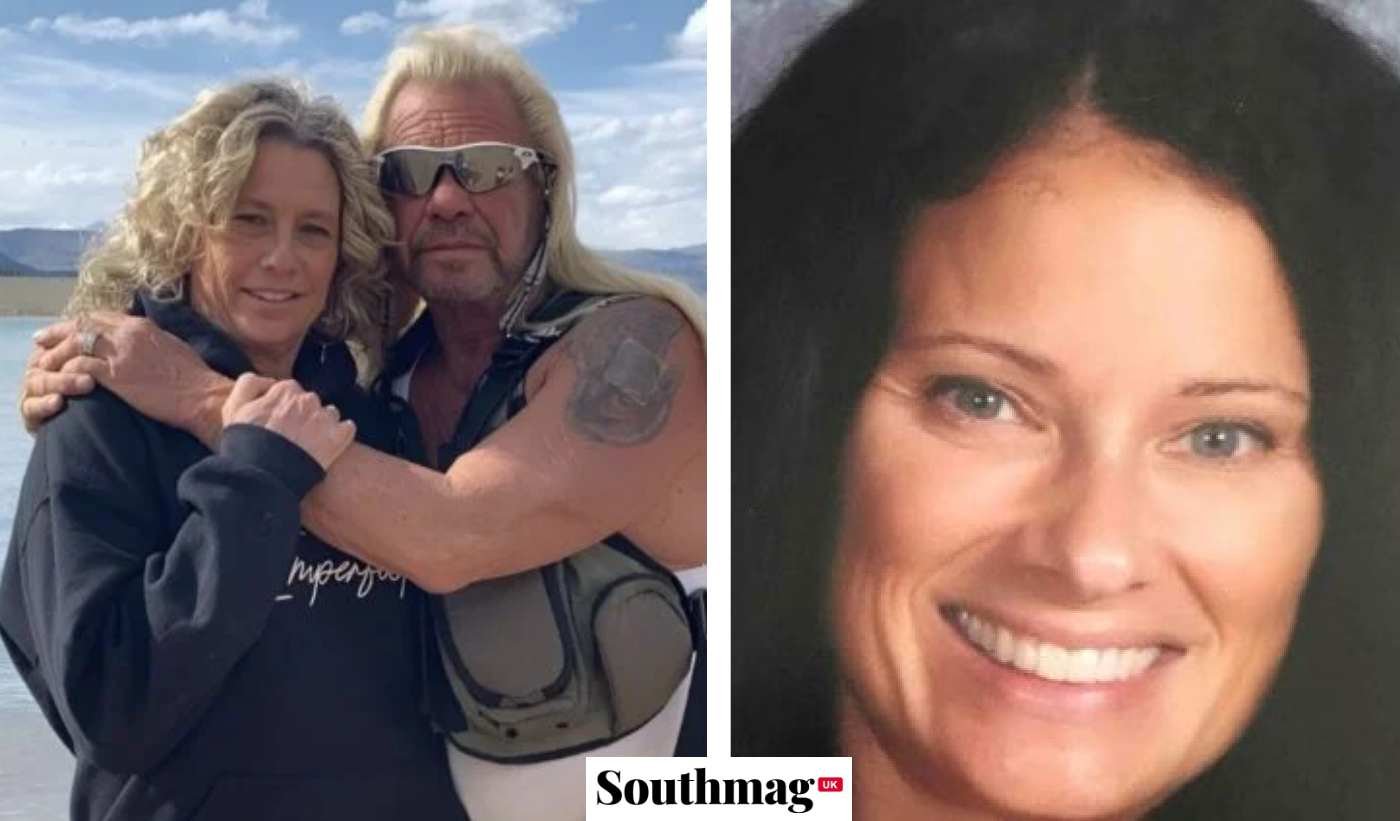
In late 1976, inside the walls of the Texas State Penitentiary in Huntsville, a young inmate named Duane Chapman received a legal envelope from a county clerk. Inside were divorce papers filed by his first wife, La Fonda Sue Honeycutt. Long before leather vests, trademark sunglasses, and international reality television fame on A&E’s Dog the Bounty Hunter, Chapman was an impoverished young husband in the Texas Panhandle. His first marriage, built during turbulent teenage years, had finally fractured under the weight of infidelity, poverty, and a tragic criminal conviction.
While millions of television viewers worldwide watched Duane “Dog” Chapman build a bail enforcement empire alongside his sons Duane Lee and Leland, their mother remained completely absent from the television screen. La Fonda Sue Honeycutt never sought red carpets, celebrity tell-all interviews, or reality show paychecks. Instead, she chose an entirely private life, stepping quietly away from the entertainment spectacle that eventually consumed her former family.
Her story offers a fascinating look into the early, untelevised years of one of reality television’s most famous bounty hunters. Before the cameras, global television syndication, and celebrity headlines, there was a young family in Texas facing immense adversity. In this comprehensive biography, we explore La Fonda Sue Honeycutt’s early marriage to Duane Chapman, the birth of their sons, her decision to divorce, and her quiet civilian life today.
Who Is La Fonda Sue Honeycutt?
La Fonda Sue Honeycutt is an American woman best known as the first wife of reality television star and professional bounty hunter Duane “Dog” Chapman. She is also the biological mother of Duane Lee Chapman Jr. and Leland Blaine Chapman, two prominent stars of the long-running television series Dog the Bounty Hunter.
Born and raised in the Texas Panhandle, La Fonda married Duane Chapman in 1972 when both were barely out of their teenage years. During a marriage characterized by financial hardship and marital strain, she worked in factory manufacturing to support their household while raising two infant boys.
After Duane received a five-year prison sentence in 1976 for his involvement in a fatal robbery, La Fonda filed for divorce. Rather than seeking publicity when her former husband and sons became global reality television stars in the 2000s, she maintained total anonymity. Today, she represents one of the most private, enigmatic figures connected to the extended Chapman family dynasty.
Quick Facts & Biographical Profile
The table below provides a verified overview of La Fonda Sue Honeycutt’s personal background, marriage, children, and historical connection to the Chapman family.
| Biographical Detail | Information |
|---|---|
| Full Name | La Fonda Sue Honeycutt (later Darnell) |
| Approximate Year of Birth | Circa 1952 – 1953 |
| Age (as of 2026) | Approximately 72 – 73 years old |
| Birthplace | Texas, United States |
| Nationality | American |
| Ethnicity | Caucasian / American |
| Hometown | Pampa, Gray County, Texas |
| First Spouse | Duane “Dog” Chapman (married April 1, 1972; divorced October 27, 1977) |
| Second Spouse | James Darnell (married circa 1977) |
| Children | Duane Lee Chapman Jr. (born 1973) & Leland Blaine Chapman (born 1976) |
| Known Early Employment | Garment & Brassiere Manufacturing Worker in Texas |
| Television Appearances | None (declined all reality television participation) |
| Current Status | Living quietly in the American West / Southwest |
Early Life in Pampa, Texas and Family Roots
La Fonda Sue Honeycutt was born in the early 1950s in the state of Texas. She grew up in Pampa, a small, hardworking industrial and agricultural city located in Gray County within the Texas Panhandle. Pampa was a town shaped by oil fields, cattle ranching, and quiet Midwestern values.
Raised in a modest household, La Fonda learned practical self-reliance from an early age. Her mother maintained a family home in Pampa, which would later serve as a sanctuary during difficult chapters of La Fonda’s first marriage. Her brother worked in law enforcement as a police officer, an occupation that valued strict adherence to legal order.
Unlike contemporary public figures whose adolescent lives are thoroughly cataloged on digital media, La Fonda’s youth remained entirely private. Friends from her formative years remembered her as quiet, hardworking, and devoted to family life. She held simple ambitions of building a stable household and raising children away from public turmoil.
The 1971 Meeting: An Unlikely Shopping Center Romance
The path that intertwined La Fonda Sue Honeycutt with Duane Chapman began unexpectedly in 1971. At the time, Duane Chapman was an eighteen-year-old wandering youth from Denver, Colorado. Having dropped out of school and experienced run-ins with juvenile authorities, Chapman was visiting the Texas Panhandle.
Their first encounter took place at a local shopping center in Pampa. La Fonda was visiting her brother, who was working on duty as a police officer in the area. In his 2007 autobiography, You Can Run But You Can’t Hide, Chapman described the moment he first laid eyes on her. He recalled being completely transfixed by her natural beauty, dark hair, and gentle posture.
Summoning his courage, Chapman introduced himself and struck up a conversation. Despite the awkwardness of approaching a young woman whose brother stood nearby in a police uniform, Chapman managed to secure an evening date. Their romantic connection was immediate and intense.
However, the relationship began with underlying complications. In his memoir, Chapman admitted that he was already romantically involved with another woman when he began courting La Fonda. This failure to maintain honest boundaries foreshadowed the emotional turbulence that would plague their young relationship for years to come.
The April Fools’ Day Wedding of 1972 and Early Poverty
After a whirlwind courtship of several months, La Fonda Sue Honeycutt and Duane Chapman decided to marry. Both were barely nineteen years old when they exchanged vows on April 1, 1972, in Pampa, Texas. Chapman later remarked on the irony of marrying on April Fools’ Day, noting how unprepared both teenagers were for the practical demands of marital life.
The newlyweds faced severe financial distress almost immediately. Duane struggled to find steady, gainful employment due to a lack of formal education and an emerging juvenile criminal record. To prevent the household from collapsing into financial ruin, La Fonda took a strenuous full-time job at a local brassiere manufacturing factory in Texas.
Working long shifts in the garment factory, La Fonda earned the primary income that paid the couple’s rent and food bills. During this period, an elderly local widow offered to sell the young couple two small, dilapidated houses for a combined total of $5,000. Recognizing an opportunity to secure permanent shelter, Chapman managed to obtain a small private loan, and the young couple became property owners.
Yet homeownership did not bring emotional harmony. Financial stress, combined with Chapman’s unpredictable temperament and association with street hustlers, placed constant strain on their domestic peace.
Motherhood: Raising Duane Lee and Leland Chapman
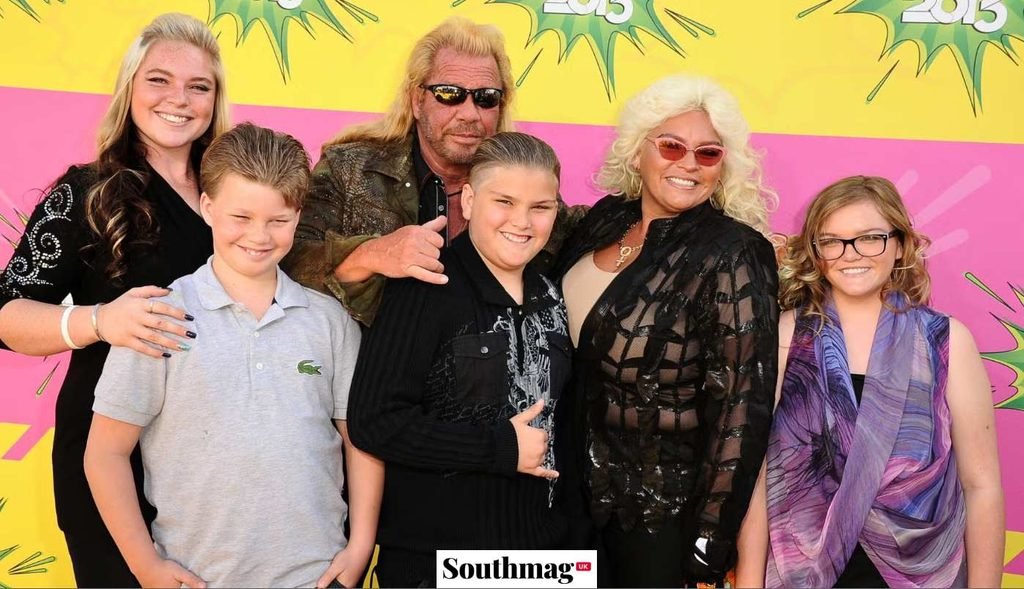
Despite the instability surrounding their home, La Fonda Sue Honeycutt gave birth to two sons during their five-year marriage, both of whom would eventually achieve international television renown.
Her first son, Duane Lee Chapman Jr., was born on January 21, 1973. The circumstances leading to his birth were marked by intense emotional conflict. Months before his arrival, La Fonda discovered that Chapman was having an affair. Devastated by the betrayal, she packed her belongings and fled back to her mother’s home in Pampa, determined to end the marriage.
When Chapman traveled to Pampa months later to plead for reconciliation, he discovered that La Fonda was already five months pregnant with their child. Deeply moved by the prospect of fatherhood, Chapman promised to reform, and La Fonda agreed to give the marriage another chance for the sake of their unborn baby.
Nearly four years later, on December 14, 1976, La Fonda gave birth to their second son, Leland Blaine Chapman. Caring for two infant children under tight financial constraints consumed all of La Fonda’s energy. She strove to provide a calm, protected domestic environment, even as her husband’s lifestyle spiraled increasingly out of control.
Cracks in the Foundation: Chronic Infidelity and Broken Trust
The ultimate downfall of the marriage between La Fonda and Duane Chapman was an utter breakdown of trust. In his autobiography, Chapman wrote candidly about his inability to maintain marital fidelity, describing romantic indiscretions as his single greatest personal weakness.
La Fonda repeatedly confronted her young husband over suspicious behavior and unfaithfulness. On one painful occasion recounted by Chapman, La Fonda discovered him inside an automobile with another woman outside a local tavern. The emotional humiliation was devastating for a young mother working in a factory to keep her family afloat.
Even Chapman’s own mother intervened, urging her son to abandon his reckless street habits and honor the devoted young wife who had sacrificed so much for him. However, Chapman continued associating with local motorcycle gangs and petty criminals, treating his marital vows with reckless disregard. By late 1976, the emotional bond between the couple had fractured beyond repair.
The 1976 Jerry Oliver Tragedy and Texas Imprisonment
The catastrophic turning point that permanently destroyed the marriage occurred in 1976. One evening, Chapman prepared to leave the house to spend time with a circle of reckless acquaintances. La Fonda pleaded with him to remain at home, warning him that his associates were dangerous and that trouble would follow. Chapman ignored her counsel and departed.
Later that evening, Chapman waited inside a getaway car while his companions entered a house in Pampa to purchase cannabis from a man named Jerry Oliver. During the encounter, an argument escalated into violence, and Oliver was fatally shot by one of Chapman’s associates.
Although Chapman did not pull the trigger and remained inside the vehicle outside, the state of Texas prosecuted him under the strict legal doctrine known as the “law of parties” (felony murder rule). Under Texas law, any participant in a felony that results in a homicide shares equal legal culpability for the death. Chapman was convicted of first-degree murder and sentenced to five years in the Texas Department of Corrections.
In 1977, Chapman was transported to the Texas State Penitentiary in Huntsville to begin serving his sentence. For La Fonda, left alone in Pampa with an infant newborn and a four-year-old toddler, the criminal conviction marked the final, irrevocable end of her marriage.
The 1977 Divorce and Starting Over with James Darnell
While Duane Chapman sat behind prison bars in Huntsville, La Fonda took decisive legal steps to sever their relationship. She filed for divorce in Gray County, Texas, seeking complete legal separation and primary custody of their two young sons.
Chapman recounted in his memoir the profound shock and grief he felt when prison guards handed him the finalized divorce papers in late 1977. The marriage was formally dissolved on October 27, 1977. Chapman realized that his reckless choices had cost him his wife, his family, and his freedom.
Following the divorce, La Fonda sought stability for her young children. She married James Darnell, an associate of Chapman’s from their earlier social circle. Seeking a complete break from the past, La Fonda and Darnell relocated with young Duane Lee and Leland to Colorado Springs, Colorado, attempting to build a normal, quiet domestic life far from the shadow of the Texas penitentiary.
The Custody Struggle and Reconnection Years Later
After serving eighteen months of his five-year prison sentence, Duane Chapman was granted parole in 1979 for exemplary behavior. Upon his release from the Texas penitentiary, Chapman found himself legally barred from possessing firearms due to his felony record. Searching for a profession, he entered the bail bonds and fugitive recovery industry in Colorado.
For roughly a decade, Chapman had minimal direct contact with his first two sons. La Fonda raised Duane Lee and Leland in Colorado, doing her best to shield them from their biological father’s past. However, as the boys entered their turbulent teenage years during the late 1980s, behavioral difficulties arose.
Duane Lee and Leland experienced disciplinary issues at school and clashed with their stepfather. Recognizing that the teenage boys required firm male guidance, custody arrangements were renegotiated. When Leland was approximately eleven years old and Duane Lee was in his early teens, they went to live with their father.
Under their father’s strict supervision, both boys learned the bail bonds business. Chapman channeled their energy into martial arts, physical fitness, and tracking fugitives. While the boys developed a close working partnership with their father, La Fonda remained quietly in the background, choosing not to interfere with their professional development.
The Rise of Dog the Bounty Hunter and Choosing Anonymity
In 2003, Duane Chapman achieved international notoriety after capturing fugitive Max Factor cosmetics heir Andrew Luster in Puerto Vallarta, Mexico. The high-profile capture attracted television producers, leading to the creation of A&E’s hit reality series Dog the Bounty Hunter in 2004.
The series became a global television phenomenon, running for eight successful seasons and spawning multiple spinoffs. Duane Lee Chapman and Leland Chapman became international reality television stars, recognized by millions for their physical bravery, tactical arrests, and colorful screen personas.
During the height of the show’s fame, television networks frequently sought to interview former spouses and background family members. Producers approached La Fonda Sue Honeycutt, offering her opportunities to appear on camera or provide interviews regarding the family’s origins. La Fonda declined every single media offer.
Unlike Chapman’s subsequent wives—including Beth Smith, who embraced television celebrity—La Fonda understood that reality television was an artificial spectacle. She refused to monetize her painful teenage memories or disrupt the quiet life she had spent decades building. Her refusal to appear on screen cemented her reputation as a woman of profound personal dignity.
Life Before the Cameras: The Untelevised Texas Years
Long before A&E created Dog the Bounty Hunter, Duane Lee Chapman was a troubled teenager in Pampa, Texas, trying to find his footing. In 1972, when he married sixteen-year-old La Fonda Sue Honeycutt, neither could have predicted the dramatic twists their lives would take. Their early years together were defined by economic hardship, young parenthood, and Duane’s growing involvement in criminal activity.
When Duane was convicted in 1976 and sentenced to five years in the Texas State Penitentiary, La Fonda faced an impossible choice. As a young mother of two toddler sons, Duane Lee Jr. and Leland, she recognized that her children needed stability, security, and a peaceful environment. Her decision to file for divorce was driven by a mother’s instinct to protect her young family from the consequences of criminal behavior.
Following the divorce, La Fonda remarried and built a quiet, respectable civilian life in Texas. She never sought money, television royalties, or tell-all interviews when Duane later achieved worldwide fame. Her steadfast refusal to exploit her past demonstrates her commitment to personal peace and dignity.
Where Is La Fonda Sue Honeycutt Today in 2026?
As of 2026, La Fonda Sue Honeycutt is approximately 72 to 73 years old, living a peaceful, retired life in the American West. She maintains no public social media profiles and makes zero appearances at celebrity fan conventions or television reunion specials.
While Duane Chapman has continued to generate tabloid headlines through subsequent marriages and personal controversies, La Fonda has enjoyed decades of uninterrupted peace. Her sons, Duane Lee and Leland, are now grown men in their late forties and early fifties, raising children of their own.
Those close to the extended family confirm that La Fonda shares a quiet relationship with her children and grandchildren away from television cameras. Her choice to step away from the entertainment world stands as a testament to her personal values: prioritizing genuine domestic happiness over fleeting public recognition.
Frequently Asked Questions About La Fonda Sue Honeycutt
Below are clear, verified answers to the most common questions readers ask regarding La Fonda Sue Honeycutt and her connection to Duane Chapman.
Who was Duane “Dog” Chapman’s first wife?
Duane Chapman’s first wife was La Fonda Sue Honeycutt. The couple married on April 1, 1972, in Pampa, Texas, and divorced on October 27, 1977.
How many children did La Fonda Sue Honeycutt have with Duane Chapman?
La Fonda and Duane Chapman had two sons together: Duane Lee Chapman Jr. (born January 21, 1973) and Leland Blaine Chapman (born December 14, 1976).
Why did La Fonda Sue Honeycutt divorce Duane Chapman?
La Fonda divorced Duane Chapman following ongoing marital infidelity, financial strain, and Chapman’s 1976 conviction and incarceration in the Texas State Penitentiary for his involvement in a fatal robbery.
Did La Fonda Sue Honeycutt appear on Dog the Bounty Hunter?
No. La Fonda Sue Honeycutt never appeared on Dog the Bounty Hunter or any television spinoffs, choosing to protect her privacy completely.
Who did La Fonda Sue Honeycutt marry after Duane Chapman?
Following her 1977 divorce, La Fonda married James Darnell and relocated with her young sons to Colorado Springs, Colorado.
Where was La Fonda Sue Honeycutt born?
La Fonda was born and raised in Pampa, Gray County, Texas, where she met Duane Chapman in 1971.
How old is La Fonda Sue Honeycutt in 2026?
Born around 1952–1953, La Fonda Sue Honeycutt is approximately 72 to 73 years old as of 2026.
Where does La Fonda Sue Honeycutt live today?
La Fonda lives a quiet, retired life in the American West away from media attention, spending time with her family.
Final Thoughts: A Legacy of Quiet Dignity
In a culture often dominated by reality television drama and social media posturing, La Fonda Sue Honeycutt stands out for her steadfast commitment to privacy. She stood beside Duane Chapman during his most difficult, impoverished years, worked tirelessly to support her household, and endured profound emotional heartbreaks.
When the opportunity arose to exploit her family’s fame for personal financial gain, she chose silence over spectacle. Her life proves that true strength does not require an audience. By choosing a private life of quiet dignity, La Fonda Sue Honeycutt authored an honorable story that commands lasting respect.
Related Biographies
- Mickey Middleton – Bryan Cranston’s former wife and her literacy mission.
- Kathy Ambush – The life of Clarence Thomas’s first wife.
Leave a Reply