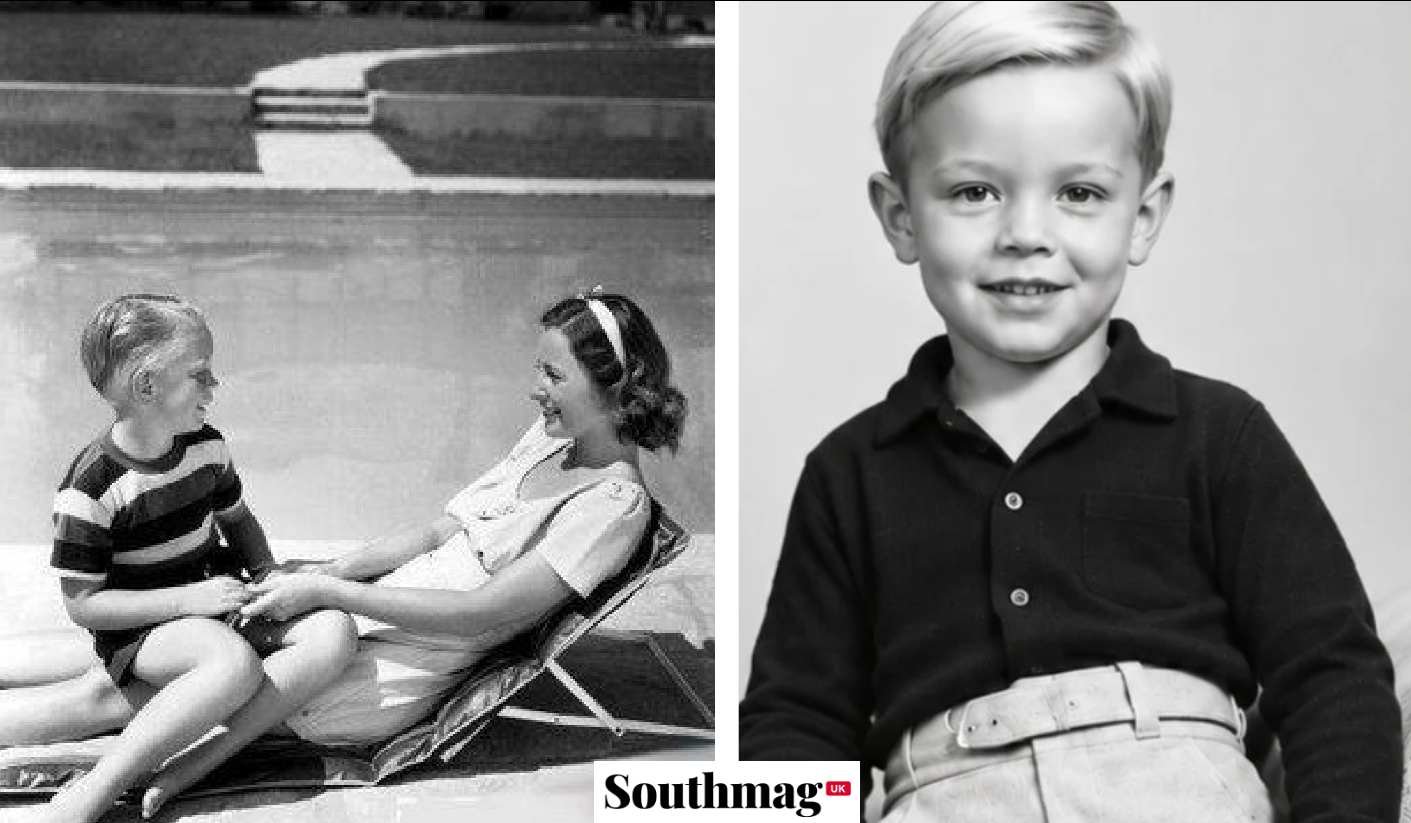
During the Golden Age of Hollywood, Barbara Stanwyck was one of cinema’s most revered actresses. Known for classics like Double Indemnity, Stella Dallas, and Ball of Fire, she was admired for her professionalism and resilience. Yet behind her public success lay a painful private story involving her only child, an adopted son named Anthony Dion Fay.
Adopted as an infant during the Great Depression, Anthony seemed destined for a life of comfort. To outsiders, joining a wealthy Hollywood household looked like great fortune. In reality, life behind closed doors was far more complicated. His childhood was shaped by his parents’ bitter divorce, years in boarding schools, and strict expectations. Over time, that emotional distance hardened into an irreversible rift that lasted for the rest of their lives.
His tragic and complex story reveals the painful emotional costs that often accompanied golden-age Hollywood adoption. While the public saw Barbara Stanwyck as an indestructible screen heroine, behind closed doors she struggled with motherhood. In this comprehensive biography, we explore Anthony Dion Fay’s childhood, the contentious divorce of his adoptive parents, his eventual estrangement, and his civilian life.
Who Was Anthony Dion Fay?
Anthony Dion Fay was the only adopted child of Hollywood legend Barbara Stanwyck and Broadway star Frank Fay. Born under a different name in 1932, he entered the family as a ten-month-old infant when both of his parents were major names in American entertainment.
Despite his connection to cinema royalty, Anthony never entered show business. He did not seek movie roles or television appearances. Instead, he worked regular blue-collar jobs in Southern California, including working as a motel desk clerk and retail employee. He married, raised a son, and lived quietly as a private citizen.
Anthony is remembered today because his life offers an honest look at the human reality behind Hollywood stardom. His strained bond with his mother shows that great wealth and fame cannot guarantee family happiness. Their story remains a touching reminder of how complex parent-child relationships can be.
Quick Facts & Biographical Profile
The table below provides a verified and cautious summary of Anthony Dion Fay’s personal background, family ties, and documented milestones.
| Biographical Detail | Verified Historical Record |
|---|---|
| Birth Name | John Charles Greene |
| Adoptive Name | Anthony Dion Fay (commonly called “Tony”) |
| Date of Birth | February 5, 1932 |
| Place of Birth | Los Angeles, California, United States |
| Date of Adoption | December 5, 1932 (formalized in Los Angeles) |
| Adoptive Mother | Barbara Stanwyck (Oscar-Nominated & Emmy-Winning Actress) |
| Adoptive Father | Frank Fay (Broadway Vaudeville Star & Film Actor) |
| Stepfather | Robert Taylor (Hollywood Leading Actor, married Stanwyck 1939–1951) |
| Marital Status | Married (to Patricia Fay in the late 1950s) |
| Children | One son (Barbara Stanwyck’s only grandchild) |
| Known Occupations | Motel desk clerk, retail employee, service worker |
| Date of Death | May 17, 2006 (aged 74) |
| Place of Death | Van Nuys, Los Angeles County, California |
Birth and Adoption: From John Charles Greene to Tony Fay
Anthony Dion Fay entered the world during a difficult period in American history. He was born on February 5, 1932, in Los Angeles, California, with the birth name John Charles Greene. The nation was in the depths of the Great Depression, a time when many struggling mothers could not afford to keep newborn infants. His birth mother placed him for adoption through an agency.
Around that time, Barbara Stanwyck and her husband Frank Fay were eager to start a family. They had married in 1928, but Stanwyck was unable to have biological children. Biographers, including Axel Madsen and Dan Callahan, noted that medical complications from an early abortion in her youth left her unable to conceive. Wishing to raise a child, Stanwyck and Fay decided that adoption was their best option.
When the boy was ten months old, the legal adoption was completed. On December 5, 1932, the court formalized the paperwork, and the infant was renamed Anthony Dion Fay. Friends and family affectionately called him Tony. Young Tony was now the son of two celebrated performers, entering a household that seemed full of promise.
The Troubled Marriage of Barbara Stanwyck and Frank Fay
Although welcoming a child is usually joyful, Tony entered a household facing severe marital tension. When Barbara and Frank married in 1928, Frank was a major Broadway star. He commanded huge salaries as a pioneer of modern vaudeville hosting. Barbara was an aspiring chorus girl who viewed Frank as both a partner and an inspiring mentor.
When the couple moved to Hollywood for sound films, their fortunes changed rapidly. Stanwyck’s natural acting style quickly turned her into a top screen star under director Frank Capra. Frank Fay, however, struggled to adapt to film, and his career quickly declined. The contrast in their success created bitter friction at home.
Frank grew resentful of his wife’s rising fame and began drinking heavily. His unpredictable behavior led to frequent arguments. Biographers have suggested that Stanwyck hoped adopting Tony would heal the marriage and bring stability to their home. Unfortunately, having a baby could not resolve their deep problems.
As Frank’s drinking worsened, the home became unstable. Biographers recount stories from this troubled time, including claims that Frank once threw young Tony into the family swimming pool during an argument. While this story appears in several biographical memoirs, it has never been confirmed by official court records. In 1935, Barbara filed for divorce, leading to a bitter custody fight. The court granted Barbara sole custody, and Frank soon drifted out of Tony’s life.
Barbara Stanwyck’s Own Childhood Trauma and Parenting Style
To understand why Barbara and Anthony struggled to connect, it helps to look at Barbara’s own youth. Long before she became a movie star, Stanwyck survived a remarkably harsh childhood that left deep emotional scars.
Born Ruby Catherine Stevens in Brooklyn, New York, she lost her mother at the age of four when a stranger pushed her off a moving streetcar. Soon afterward, her grieving father abandoned his children to work on the Panama Canal and never returned. Ruby was raised in foster homes, learning early that survival depended on self-reliance and emotional toughness.
These experiences helped make Stanwyck one of Hollywood’s most disciplined actresses. However, they also made her emotionally guarded. When raising Anthony, she applied the same strict standards to him that she applied to herself. She valued discipline and independence above emotional comfort.
Rather than showing affection easily, Stanwyck expected Anthony to prove his character through good grades and proper behavior. For a sensitive boy who wanted warmth, this strict approach felt cold. When Anthony struggled, Barbara often reacted with disappointment and withdrawal rather than gentle comfort.
Boarding Schools and Early Childhood Separation
During the late 1930s and 1940s, Barbara Stanwyck was one of the busiest actresses in Hollywood. She often made three or four films a year, eventually becoming the highest-earning woman in the United States in 1944. Managing such an intense schedule as a single working mother created real difficulties.
To provide structured schooling, Stanwyck placed Anthony in boarding schools at a very early age. Tony spent much of his childhood living away from home. He attended schools like St. John’s Military Academy in Los Angeles and spent summers at out-of-town camps.
Stanwyck believed that boarding schools would help Tony develop responsibility and discipline. But Tony often experienced the arrangement as emotional rejection. Instead of enjoying a warm home life with his mother, he spent his youth surrounded by strict teachers, rules, and dormitories.
One especially painful event occurred when Anthony was around twelve years old. While at summer camp, he suffered an injury that required hospitalization. According to Anthony’s later memories, camp officials repeatedly tried to reach his mother, but she did not visit the hospital or return calls. Whether studio schedules or poor communication caused the delay, the incident left a deep emotional wound on young Tony.
The Robert Taylor Era: A Brief Father Figure
In May 1939, Barbara Stanwyck married actor Robert Taylor, creating one of Hollywood’s most admired couples. Taylor was known as an easygoing, outdoor-loving man who made a sincere effort to be a positive father figure for young Anthony.
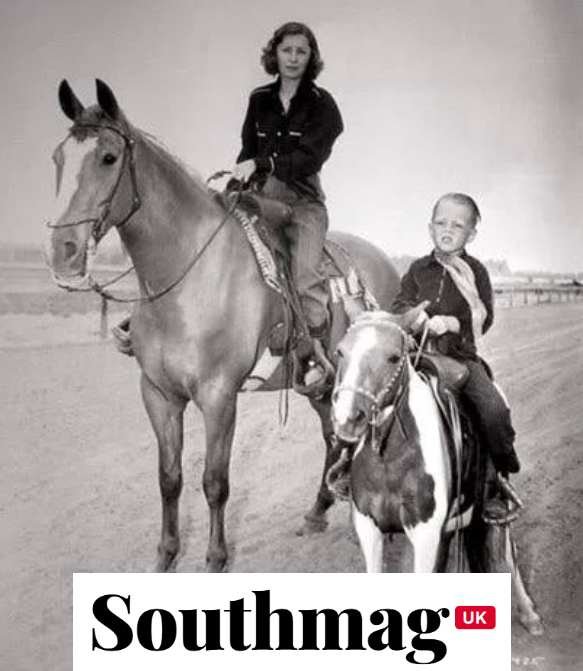
During the early years of the marriage, Taylor took Tony fishing, introduced him to ranch life, and provided calm guidance. Anthony responded well to Taylor’s gentle nature, and for a short time, the family enjoyed a more stable home life on their Northridge ranch.
Unfortunately, that stability was short-lived. In 1943, Taylor enlisted in the United States Navy to serve during World War II as a flight instructor. His military duties kept him away from home for several crucial years. After the war, Taylor and Stanwyck’s marriage faced strain, eventually ending in divorce in 1951. With Taylor gone, Anthony lost the only steady father figure he had known.
The Teenage Years: Rebellion and Military Academy
As Anthony Dion Fay reached his teenage years, the unresolved distance between him and his mother began causing behavioral problems. Tony struggled with classes, earned poor grades, and started hanging out with rebellious crowds. Looking back, he admitted that some of his actions were attempts to get his mother’s attention.
Stanwyck, who placed immense value on self-discipline, was disappointed by his behavior. Instead of sitting down for open conversations, she responded with greater strictness. When Anthony was around fifteen, she sent him to a military boarding school in Indiana, hoping the strict environment would improve his discipline.
Rather than helping, the move pushed them further apart. Tony felt discarded, while Stanwyck felt frustrated that her son seemed unwilling to take advantage of the education she was funding. Once Tony finished military school, he decided not to return to his mother’s house. Direct communication between them soon broke down completely.
The 1952 Lunch: Their Final Face-to-Face Encounter
By the early 1950s, Barbara and Anthony were living in Southern California without speaking. Recognizing how tragic their silence had become, Stanwyck’s older brother, Byron “Buck” Stevens, tried to step in as a peacemaker.
In 1952, Uncle Buck organized a private lunch meeting between Barbara Stanwyck and twenty-year-old Anthony Dion Fay. Both agreed to meet, hoping it might help resolve old misunderstandings. However, the meeting did not lead to a reconciliation.
Anthony later recalled that the encounter felt formal and distant. They spoke politely, like two business acquaintances having lunch, rather than a mother and son. Anthony asked about her acting work, and Barbara replied courteously, but there was little warmth or affection. When the lunch ended, they said goodbye and went their separate ways. It was the last time they ever saw each other in person.
Adult Life Away from Hollywood: Work, Marriage, and a Grandson
Determined to build his own life, Anthony Dion Fay made no attempt to trade on his mother’s famous name. He stayed completely away from the film industry and took regular working-class jobs. Over the years, he worked as a gas station attendant, a store clerk, and a motel employee in Los Angeles.
In the late 1950s, Anthony married a woman named Patricia. Hoping for the warm family life he had missed as a child, he looked forward to starting fresh. Anthony sent his mother a wedding invitation, hoping she would attend and celebrate his special day.
Stanwyck did not attend the wedding. Instead, she sent the newlyweds a gift set of bathroom towels and linens. While the gift showed she acknowledged the event, her absence was a painful reminder of how permanent their separation had become.
A few years later, Anthony and Patricia had a son, who was Barbara Stanwyck’s only grandchild. When informed about the baby, Stanwyck sent a check for $100 and baby furniture to congratulate them. However, she never visited the baby and never met her grandson. Anthony later shared that her refusal to meet her grandson was one of the biggest heartbreaks of his adult life.
The 1960 Motel Arrest and Anthony’s Candid Public Words
In 1960, Anthony Dion Fay unexpectedly found his name in the news. While working the night desk at a motel in North Hollywood, he was arrested after authorities alleged that explicit paperback books had been sold to teenagers at the location. Anthony pleaded not guilty and was released on $500 bail.
Because Barbara Stanwyck was an iconic Hollywood celebrity, reporters quickly rushed to cover the story of her adopted son’s arrest. Journalists asked Anthony about the charges, his everyday life, and his famous mother.
Rather than making excuses or criticizing Stanwyck, Anthony gave a remarkably honest and humble interview. Speaking to reporters, he stated plainly: “I guess I was just a bad boy.” He spoke openly about his youthful mistakes, saying:
“I was a rebellious kid… I didn’t appreciate the chances she gave me. She would have sent me to any college in the world, but I didn’t take advantage of it. It was more my fault than hers.”
Anthony confirmed to reporters that he and Barbara had not spoken for many years, but he refused to say anything negative about her. His willingness to take personal responsibility showed a man who held no anger, only deep regret over missed opportunities.
The Psychological Burden of Hollywood Expectations
Growing up as the adopted son of Barbara Stanwyck and Frank Fay presented unique emotional hurdles that few outsiders truly understood. During the 1930s and 1940s, studio publicists carefully constructed an image of a picture-perfect Hollywood family. In reality, Frank Fay’s severe alcoholism, professional jealousy, and violent outbursts created an atmosphere of constant tension inside their San Fernando Valley home.
Following their bitter 1935 divorce, Stanwyck gained custody of young Dion. However, her demanding film schedule and strict, authoritarian parenting style created a widening emotional gulf between mother and son. Dion struggled with boarding school discipline and felt incapable of living up to his mother’s exacting expectations of perfection.
Rather than using his mother’s immense influence to secure film roles or studio contracts, Dion made a conscious decision as an adult to walk away from Hollywood entirely. He chose to work ordinary civilian jobs as a clerk and service employee, finding greater peace in obscurity than in the unforgiving glare of the entertainment industry.
Failed Reconnection Attempts and Decades of Silence
Even as years passed, Anthony never completely stopped hoping for peace with his mother. As he grew older, he recognized how short life was and made quiet inquiries to see if Barbara might be willing to talk.
According to family reports, Anthony contacted his Uncle Buck, asking if he could visit Barbara or speak with her on the phone. Uncle Buck gently advised him not to reach out. He explained that Barbara had closed the door on their past and was not open to reopening old family wounds. Respecting her decision, Anthony did not try to contact her again or visit her uninvited.
Biographers note that Stanwyck was known for her firm determination. When she made a choice, she rarely changed her mind. While that resolve had helped her overcome poverty and succeed in Hollywood, that same toughness made it very hard for her to let her guard down and forgive past family pain.
Barbara Stanwyck’s 1990 Passing and Estate Reality
On January 20, 1990, Barbara Stanwyck passed away at Saint John’s Health Center in Santa Monica, California, at the age of 82. The causes of death were congestive heart failure and chronic obstructive pulmonary disease (COPD). Her passing marked the end of an extraordinary career in American film and television.
Following her strict instructions, no funeral or memorial service was held. Her body was cremated, and her ashes were scattered from a helicopter over Lone Pine, California, a rugged location where she had filmed several of her favorite Western movies.
After her death, questions arose about her estate. Over her decades in entertainment, Stanwyck had earned substantial wealth through wise investments and steady work. In her will, she directed most of her multi-million dollar estate to charitable organizations, including The Motion Picture & Television Fund, as well as leaving gifts for close friends and loyal household staff.
Some biographical accounts claim that Stanwyck left a small financial trust for Anthony on the condition that he would not write a tell-all book about their relationship. However, public records indicate that Anthony was not named as a major heir to her estate. Regardless of whether a small trust existed, Anthony never attempted to exploit her name, honoring her memory through silence.
Anthony Dion Fay’s Final Years and 2006 Death
After Barbara Stanwyck died in 1990, Anthony Dion Fay continued living quietly in California. While some children of classic movie stars published tell-all books or gave dramatic interviews, Anthony chose personal dignity.
He spent his final years residing in Van Nuys in the San Fernando Valley. He focused on his family, avoided the press, and lived peacefully as a private citizen. People who knew him saw him as a polite, hardworking man who rarely mentioned his Hollywood connections.
On May 17, 2006, Anthony Dion Fay passed away in Van Nuys, California, at the age of 74. His family chose not to release an official cause of death or publish a public obituary. He was buried quietly in California, concluding a life that had started amidst the glamour of 1930s Hollywood and ended in peaceful privacy.
Frequently Asked Questions About Anthony Dion Fay
Below are clear, verified answers to the most common questions readers ask about Anthony Dion Fay and his life with Barbara Stanwyck.
What was Anthony Dion Fay’s birth name?
Anthony Dion Fay was born as John Charles Greene on February 5, 1932, in Los Angeles, California. He received the name Anthony Dion Fay when Barbara Stanwyck and Frank Fay finalized his adoption on December 5, 1932.
Why did Barbara Stanwyck adopt Anthony Dion Fay?
Barbara Stanwyck was unable to have biological children due to medical complications from an early abortion in her youth. Hoping to start a family, she and her first husband Frank Fay adopted Anthony in 1932, hoping a child would bring happiness to their marriage.
Why did Anthony Dion Fay and Barbara Stanwyck become estranged?
Their estrangement developed over many years due to strict parenting, frequent boarding school placements, teenage rebellion, and differing personalities. Stanwyck’s own painful childhood made it difficult for her to provide gentle affection when Anthony struggled.
Did Barbara Stanwyck attend Anthony Dion Fay’s wedding?
No. When Anthony invited his mother to his wedding in the late 1950s, Stanwyck chose not to attend. She sent the couple a gift set of bathroom towels and linens instead.
Did Barbara Stanwyck ever meet her grandson?
No. When Anthony and his wife had a son, Stanwyck sent a check for $100 and baby furniture, but she never visited the child and never met her only grandchild during her lifetime.
What did Anthony Dion Fay say in his 1960 interview?
After being arrested in 1960 at a North Hollywood motel, Anthony spoke openly with reporters, taking personal blame for the estrangement. He admitted he was a rebellious youth, noted that Stanwyck would have sent him to any college, and stated that their separation was “more my fault than hers.”
When did Barbara Stanwyck pass away, and did Anthony inherit her money?
Barbara Stanwyck died on January 20, 1990, at age 82. She directed the vast majority of her multi-million dollar estate to charitable causes, such as The Motion Picture & Television Fund, leaving Anthony largely excluded from her wealth.
When did Anthony Dion Fay die?
Anthony Dion Fay died on May 17, 2006, in Van Nuys, Los Angeles County, California, at the age of 74. He passed away quietly as a private citizen.
Final Thoughts: A Legacy of Quiet Dignity and Acceptance
The life of Anthony Dion Fay is one of the most touching human stories from Hollywood’s Golden Age. While movie fans saw Barbara Stanwyck as an indestructible screen icon, Anthony’s life shows the quiet domestic sadness that fame could never fix.
What stands out most about Anthony was how he lived his adult life. Despite facing rejection and public attention, he never sold his story, never wrote a tell-all book, and never spoke with bitterness about his mother. By taking responsibility for his past and choosing a quiet life of dignity, Anthony demonstrated a quiet strength that was entirely his own.
Related Biographies
- Charles Donald Fegert – The life and career of Barbara Eden’s former husband.
- Margie Willett – Inside Dick Van Dyke’s first marriage and family life.
Leave a Reply