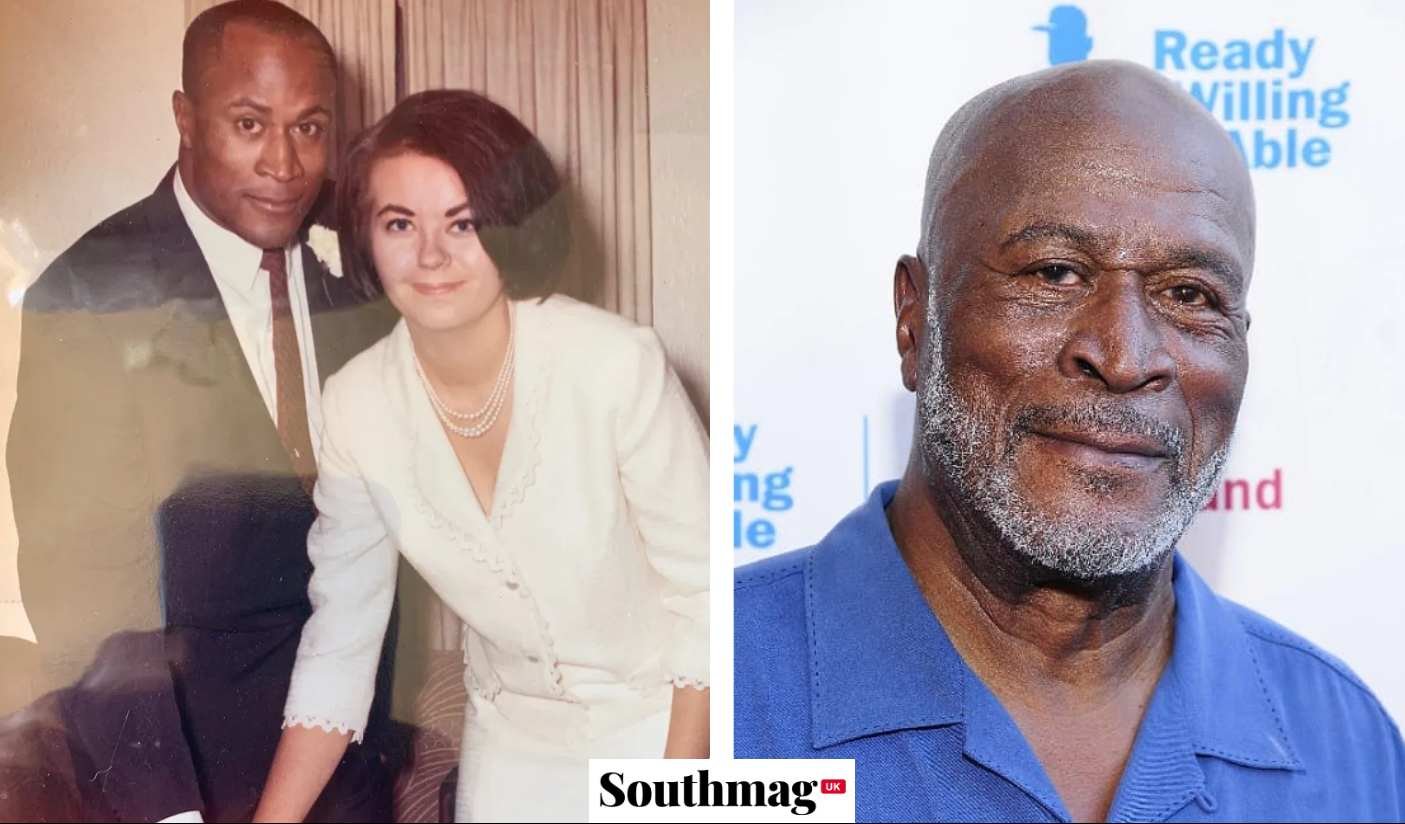
When the history of twentieth-century American television is written, few figures stand as tall or resonate as deeply as John Amos. From his defining portrayal of the proud, unyielding family patriarch James Evans Sr. on CBS’s ground-breaking sitcom Good Times to his Emmy-nominated performance as the adult Kunta Kinte in the historic 1977 miniseries Roots, Amos gave voice, dignity, and cultural gravitas to generations of viewers. Yet long before Hollywood embraced his commanding presence, and well before network contracts transformed his life, the foundation of his personal and artistic journey was anchored by a remarkably courageous, independent woman: his first wife, Noel J. Mickelson.
Much like June Baranco stood as the steady, quiet domestic rock behind morning broadcaster Bryant Gumbel, or how Jean Taynton supported actor John Lithgow during his struggling years on the New York stage, Noel J. Mickelson was far more than an observer in a celebrity’s rise to prominence. She was a true renaissance woman—a gifted fine artist, a skilled carpenter who mastered a craft almost exclusively reserved for men in the 1960s, and an accomplished competitive equestrian. Most profoundly, her 1965 marriage to John Amos was an act of quiet, historic defiance, solemnized two years before the United States Supreme Court struck down anti-miscegenation laws in the landmark ruling Loving v. Virginia.
In this comprehensive biographical retrospective, we examine the extraordinary life of Noel Jean Mickelson: her rural roots in Jackson County, Minnesota; her artistic training at Colorado State University; her marriage and civil rights courage; her craftsmanship and horsemanship; the successful creative legacies of her children Shannon and K.C. Amos; and the enduring lessons of grace she left behind before her passing in 2016.
Quick Facts & Biographical Summary: Noel J. Mickelson
| Biographical Dimension | Details & Verified Information |
|---|---|
| Full Name | Noel Jean Mickelson (later Noel Mickelson Amos) |
| Date of Birth | August 22, 1943 |
| Birthplace | Jackson County, Minnesota, United States |
| Date of Passing | 2016 (Aged 72) |
| Parents | Wilbur B. Mickelson and Dorothy J. Tims |
| Heritage & Ancestry | Ashkenazi Jewish and Danish heritage |
| Alma Mater | Colorado State University (CSU), Fort Collins, Colorado |
| Primary Vocations | Fine Artist (Painter), Master Carpenter & Woodworker, Equestrian |
| Spouse | John Amos (m. 1965 – div. 1975) |
| Children | Shannon Amos (b. 1966, Producer & Entrepreneur), Kelly Christopher “K.C.” Amos (b. 1970, Director & Producer) |
| Historic Milestone | Pioneering interracial marriage in 1965 (pre-dating Loving v. Virginia) |
| Known For | Artistic excellence, artisanal craftsmanship, maternal mentorship, and quiet strength |
Early Life and Heritage in Rural Jackson County, Minnesota
Noel Jean Mickelson was born on August 22, 1943, in Jackson County, situated in the fertile prairie agricultural region of southwestern Minnesota. Her family lineage represented a distinct cultural intersection: she carried rich Ashkenazi Jewish ancestry alongside deep Danish roots. Her father, Wilbur B. Mickelson, and her mother, Dorothy J. Tims, cultivated a home environment characterized by an uncompromising work ethic, intellectual openness, and a deep appreciation for the natural world.
Growing up in rural Minnesota during the 1940s and 1950s instilled in Noel a profound self-reliance. Far from the congested urban centers that would later dominate her adult life, the open expanses of Minnesota gave her an instinctive connection to animals, wide-open horizons, and hands-on physical creation. While many young women of the post-war era were steered toward conventional domestic expectations, Noel’s parents encouraged her to think independently, explore practical tools, and develop a wide range of tangible skills.
Her childhood was defined by two great passions that emerged early and stayed with her throughout life: horses and visual art. She spent hours sketching the pastoral landscapes around her and helping tend to livestock, developing the physical stamina, patience, and emotional calm that would define her character during the turbulent decades that lay ahead.
Education at Colorado State University: Fine Arts and New Perspectives
Seeking to formalize her creative instincts, Noel enrolled at Colorado State University (CSU) in Fort Collins, Colorado, during the early 1960s. At CSU, she immersed herself in the Fine Arts curriculum, studying drafting, color theory, sculptural balance, and contemporary art history. The university setting exposed Noel to the burgeoning intellectual, artistic, and political currents that were beginning to transform American college campuses during the dawn of the civil rights movement.
Noel flourished in the studio environment. Rather than confining herself to conventional realistic portraits or traditional landscapes, she developed an affinity for abstract and surrealist modes of expression. Her professors and peers recognized her as an introspective creator who preferred letting her canvases speak for themselves. Her time at CSU not only sharpened her technical aesthetic skills but also solidified her lifelong worldview: one centered on individual integrity, creative exploration, and an indifference to superficial social conventions.
It was also on the vibrant campus of Colorado State University that Noel’s path crossed with a charismatic, physically imposing student-athlete who would alter the trajectory of her life: John Amos.
A Renaissance Woman: Artistry, Carpentry & Equestrian Mastery
What made Noel J. Mickelson truly unique among women of her era was the sheer breadth of her practical talents. While mainstream culture often forced women into rigid, compartmentalized identities, Noel moved fluidly between the refined world of fine art, the demanding physical craft of carpentry, and the rigorous discipline of equestrian sports.
1. Master Fine Artist
Art was never merely a leisure hobby for Noel; it was her primary language of emotional processing. Throughout her adult life, she produced an extensive body of work featuring mixed-media painting, abstract interpretations of human relationships, and evocative studies of nature. She eschewed commercial gallery circuits and commercial hype, preferring to share her pieces privately with family, close friends, and regional collectors. Her artwork reflected her unique Danish and Jewish heritage, infused with the organic textures and earthy tones of the American Midwest and Rocky Mountains.
2. Breaking Barriers in Carpentry and Woodworking
In the 1960s and 1970s, custom carpentry and structural woodworking were almost universally dominated by men. Noel rejected these gender limitations entirely. Armed with a profound understanding of structural design from her university studies, she learned woodworking, joinery, and furniture construction. She built sturdy, elegant hardwood tables, custom cabinetry, shelving, and sculptural household decor from raw timber.
Her carpentry work demonstrated both practical problem-solving and exquisite aesthetic taste. When she and John Amos were struggling financially in the early years of their marriage, Noel’s hands-on woodworking abilities helped furnish and repair their homes without draining their limited savings. Her children would later recall watching their mother skillfully handling table saws, hand planes, and chisels with effortless mastery.
3. Accomplished Equestrian
Rooted in her Minnesota upbringing, Noel’s bond with horses remained one of the central joy centers of her life. She was an accomplished rider who competed in regional equestrian events and horse shows. Training and riding horses requires an uncommon combination of physical courage, gentle empathy, and absolute presence of mind—traits that Noel possessed in abundance. In times of personal difficulty and media scrutiny, the stables and riding trails served as her ultimate sanctuary.
Meeting John Amos: College Romance in Fort Collins
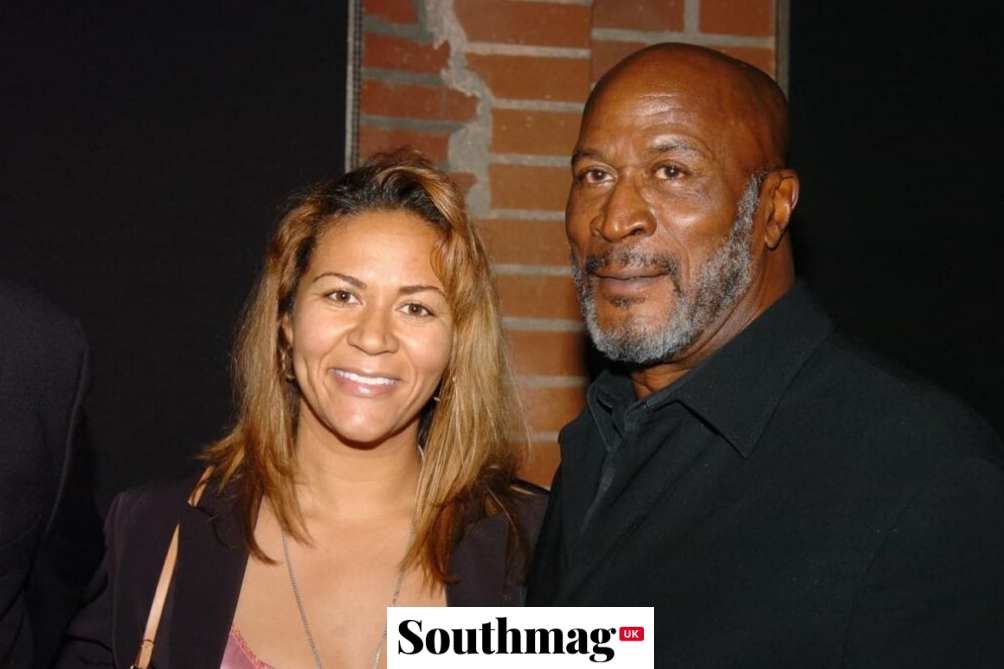
When Noel Mickelson met John Amos at Colorado State University in the early 1960s, John was an athletic powerhouse. Born in Newark and raised in East Orange, New Jersey, John had come to CSU on a football scholarship, playing defensive end for the CSU Rams while majoring in sociology. With his booming voice, broad shoulders, razor-sharp wit, and philosophical mind, John was an undeniable presence on campus.
Despite their contrasting geographical and cultural upbringings—Noel hailing from the quiet prairies of rural Minnesota and John from the gritty urban neighborhoods of northern New Jersey—they discovered an instantaneous intellectual and human kinship. Both felt somewhat out of place in mainstream social cliques, and both shared a deep passion for writing, creative expression, and social justice. What began as campus conversations quickly blossomed into a deep, enduring romance.
The Historic 1965 Interracial Marriage: Defying Social Stigma Pre-Loving v. Virginia
In 1965, Noel J. Mickelson and John Amos made the courageous decision to marry. To understand the magnitude of this decision, one must examine the socio-legal reality of the United States in the mid-1960s.
When Noel and John exchanged vows in 1965, interracial marriage was not yet constitutionally protected across the United States. It would not be until June 12, 1967—two full years later—that the United States Supreme Court issued its landmark unanimous ruling in Loving v. Virginia, declaring all state anti-miscegenation laws unconstitutional under the Fourteenth Amendment. In more than a dozen American states, their union was considered a criminal act punishable by imprisonment.
Even in states where interracial unions were technically legal, social condemnation, housing discrimination, street harassment, and hostility from both white and Black communities were daily realities. Noel faced quiet ostracization from conservative segments of society who could not accept a white woman marrying an African American man during the height of the civil rights struggle.
Yet Noel never wavered. She did not view her marriage as a political statement or an act of rebellious theatrics; for her, it was simply an authentic expression of love, respect, and shared destiny. Her calm refusal to capitulate to bigotry or social intimidation was a masterclass in quiet moral courage.
The Grueling Early Years: From Football Cuts to Stand-Up Comedy
The first decade of Noel and John’s marriage was characterized by intense financial uncertainty and frequent relocations. Following college, John pursued professional football with relentless determination. In 1964, he signed with the Denver Broncos, only to be released on the second day of training camp due to a torn hamstring. He went on to play for minor league and semi-pro teams including the Canton Bulldogs, the Joliet Chargers, and the Norfolk Neptunes in the Continental Football League, before earning a training camp invite from the Kansas City Chiefs in 1967 under legendary coach Hank Stram.
Throughout these grueling years of constant travel, physical injuries, and low paychecks, Noel was the family’s immovable anchor. When John was finally cut from the Chiefs, Coach Stram encouraged him to explore his remarkable writing and comedic talents. Transitioning from sports to entertainment meant starting completely at zero.
The young family relocated to Vancouver, British Columbia, and later to Los Angeles. John worked odd jobs—including a stint as a social worker at the Vera Institute of Justice in New York—while performing stand-up routines in small comedy clubs at night. During this lean period, Noel’s thriftiness, domestic resourcefulness, and carpentry skills kept their household running smoothly. Her steadfast belief in John’s talent provided him with the confidence to persist when rejection seemed endless.
The Breakthrough: From ‘Mary Tyler Moore’ to ‘Good Times’ and ‘Roots’
By the early 1970s, John’s relentless persistence yielded historic breakthroughs. In 1970, he landed the recurring role of Gordy Howard, the affable, commonsense weatherman on The Mary Tyler Moore Show on CBS. His warm screen presence immediately caught the attention of visionary television producer Norman Lear.
In 1974, Lear cast John Amos as James Evans Sr., the fiercely devoted working-class father in the iconic Norman Lear sitcom Good Times, opposite Esther Rolle. The show became an immediate ratings juggernaut and a groundbreaking cultural touchstone, marking the first time an American television sitcom centered on a complete, two-parent African American family navigating real economic struggles with humor, dignity, and love.
A few years later, in 1977, John gave an unforgettable, Emmy-nominated performance as the older Kunta Kinte (Toby) in the seminal ABC miniseries Roots, watched by over 130 million Americans. Overnight, the Amos name became synonymous with Hollywood royalty and Black cultural excellence.
While fame, wealth, and public adulation swirled around their family, Noel made a deliberate, conscious choice: she stayed completely away from the Hollywood glamour machine. She did not seek red carpet photo opportunities, did not grant intrusive interviews, and did not trade on her husband’s fame. Instead, she concentrated her energies where it mattered most—on nurturing, protecting, and educating their two young children.
Devoted Motherhood: Raising Shannon and K.C. Amos
Noel J. Mickelson and John Amos were blessed with two children, both of whom grew up to become exceptionally talented, creative forces in the global entertainment and wellness industries:
- Shannon Amos (born 1966): Their eldest child, Shannon, inherited her mother’s keen aesthetic eye and adventurous spirit. She forged a distinguished career as a successful film and television producer, music video executive, and creative director for networks including BET, Warner Bros, and MTV. Later in life, Shannon founded Sumanah, a transformative international travel, yoga, and holistic wellness platform, dedicating her work to helping people heal through mindful living.
- Kelly Christopher “K.C.” Amos (born 1970): Their son K.C. followed directly in his parents’ artistic footsteps. He became a Grammy-nominated music video director, producer, editor, and cinematographer, directing iconic visuals for hip-hop and R&B legends including Snoop Dogg, Lil’ Flip, and MC Hammer, as well as directing feature films and documentaries.
Both Shannon and K.C. have publicly credited their mother’s gentle wisdom, unconditional love, and grounding influence for keeping them emotionally balanced during their father’s meteoric rise to fame. Noel ensured that their home remained a peaceful sanctuary where creativity, intellectual debate, reading, and kindness took precedence over Hollywood vanity.
The 1975 Divorce: Graceful Parting After a Decade of Unity
In 1975, after ten years of marriage, Noel J. Mickelson and John Amos finalized their divorce. The exact reasons for their parting were kept private, as both parties held a deep mutual respect that precluded tabloid mudslinging. The pressures of John’s relentless work schedules, frequent cross-country shoots, and the volatile environment of 1970s television production undoubtedly placed heavy strains on their domestic life.
Following their divorce, Noel exhibited the same extraordinary dignity that defined her entire life. There were no sensational court battles, no vindictive media leaks, and no public disparagements. Both parents remained fiercely committed to co-parenting Shannon and K.C., ensuring that their children never felt torn between two loving parents. John Amos went on to remarry briefly later in life (to actress Lillian Lehman from 1978 to 1979), but he always spoke of Noel with profound respect and gratitude.
Later Years: Private Life, Artistry and Quiet Resilience
Following her divorce, Noel J. Mickelson stepped permanently out of the public spotlight. She chose a tranquil, private life centered on her personal creative passions: painting in her private studio, continuing her woodworking projects, caring for animals, and mentoring young artists in her community.
In her later decades, published reports noted that Noel faced severe physical health challenges resulting from surgical complications, which reportedly left her visually impaired and with limited mobility. Yet those who were blessed to know her during these years remarked that her spirit remained completely unbroken. Her trademark warmth, sharp intellectual humor, and maternal love never dimmed. She faced physical adversity with the exact same serene courage she had displayed when defying racial prejudice in the 1960s.
Noel J. Mickelson’s Passing in 2016 and John Amos’ 2024 Legacy
In 2016, Noel Jean Mickelson passed away peacefully at the age of 72, surrounded by the love of her children and closest family members. Because Noel had lived with such deliberate privacy, her passing was not accompanied by Hollywood press releases or sensational tabloid obituaries. Instead, she was honored in the quiet, intimate manner she had always preferred.
Her legacy gained poignant renewed attention in late 2024, when legendary actor John Amos passed away on August 21, 2024, at the age of 84 in Inglewood, California. As cultural commentators, film historians, and millions of fans around the world celebrated John Amos’ monumental career, many historians and journalists revisited the foundational role Noel J. Mickelson played during his formative decade. Together, their shared journey represented a courageous chapter in twentieth-century American history.
Comparative Analysis: Noel J. Mickelson vs. Other Trailblazing Celebrity Partners
To fully appreciate Noel J. Mickelson’s enduring historical significance, it is illuminating to compare her life with other remarkable women who stood as the foundational pillars of legendary figures:
| Individual | Prominent Partner | Key Shared Theme | Personal Legacy |
|---|---|---|---|
| Noel J. Mickelson | John Amos (Iconic actor: Good Times, Roots) | Defied 1960s racial barriers pre-Loving v. Virginia; supported early broke years | Renaissance fine artist, master carpenter, equestrian, and devoted mother of 2 |
| June Baranco | Bryant Gumbel (First Black morning news anchor) | Domestic anchor during historic 15-year Today Show milestone; high-pressure media spotlight | Fashion Institute of Technology artist; chose complete privacy and maternal dignity |
| Jean Taynton | John Lithgow (Acclaimed stage & screen actor) | Supported Broadway breakthrough; weathered extreme artistic and emotional instability | Dedicated teacher who protected family boundaries before and after public separation |
| Ann Carlson Khan | Shahid Khan (Billionaire sports & auto mogul) | Stood by husband from penniless college days through massive global business empire | Accomplished modern dancer, choreographer, and premier philanthropist across the US & UK |
| Martie Allen | Kristy McNichol (Emmy-winning actress) | Provided unconditional sanctuary away from toxic Hollywood child-star pressures | Advocate for mental health, privacy, and authentic LGBTQ+ relationship resilience |
Enduring Cultural Legacy: Quiet Strength That Transcends Fame
In our modern era of hyper-curated social media personas and performative public vulnerability, Noel J. Mickelson’s life stands as a masterclass in authenticity, courage, and creative purpose. She proved that a woman’s identity is not defined by who she marries, how much money her household generates, or how many red carpet cameras capture her image.
From the sweeping plains of Jackson County, Minnesota, and the art studios of Colorado State University to the historical frontier of 1960s civil rights, Noel walked through life with an unwavering moral compass. Her hands shaped oil paintings and carved solid hardwood furniture; her spirit calmed powerful horses; and her heart nurtured two visionary children who continue to enrich American culture today. Noel J. Mickelson deserves to be remembered not merely as John Amos’ former wife, but as an extraordinary American heroine of artistry, grit, and timeless grace.
Frequently Asked Questions About Noel J. Mickelson
Who was Noel J. Mickelson?
Noel Jean Mickelson was an American fine artist, master carpenter, and competitive equestrian, best known historically as the first wife of renowned actor John Amos. She was a courageous cultural pioneer who entered an interracial marriage before it was universally legalized across the United States.
When did Noel J. Mickelson marry John Amos?
Noel Mickelson married John Amos in 1965 after meeting as students at Colorado State University in Fort Collins. Their marriage took place two years prior to the historic 1967 Supreme Court ruling in Loving v. Virginia.
How many children did Noel J. Mickelson have?
She had two children with John Amos: daughter Shannon Amos (born 1966), an accomplished film producer, writer, and wellness entrepreneur; and son Kelly Christopher “K.C.” Amos (born 1970), a Grammy-nominated music video director and producer.
What were Noel J. Mickelson’s professional vocations?
Noel was a multi-talented artisan. She was a fine artist specializing in abstract and surrealist painting, a skilled structural carpenter and furniture maker, and an accomplished competitive equestrian.
What was Noel J. Mickelson’s heritage and background?
She was born in Jackson County, Minnesota, to Wilbur B. Mickelson and Dorothy J. Tims. She carried a rich cultural background of Ashkenazi Jewish and Danish heritage.
When did Noel J. Mickelson and John Amos divorce?
The couple divorced amicably in 1975 after ten years of marriage. They maintained a respectful, collaborative relationship focused on co-parenting their two children away from tabloid publicity.
When did Noel J. Mickelson pass away?
Noel J. Mickelson passed away in 2016 at the age of 72. Her passing was kept private according to her lifelong preference for quiet dignity.
What was Noel J. Mickelson’s estimated net worth?
While reliable public financial filings for private individuals are not officially released, various archival estimates place her independent estate between $300,000 and $500,000 at the time of her passing, earned through her craft, property, and artistic endeavors.
Leave a Reply